

Key Takeaways
Start here
Setting a realistic travel budget
Next
Choosing a destination that works for everyone
Then
Logistics: transportation and accommodation
Almost ready
Keeping kids comfortable and on schedule
Final check
What most first-timers don't expect
Setting a realistic travel budget
The single biggest mistake first-time family travelers make is picking a destination before they know what they can actually spend. Flip that order: figure out your number first, then choose a trip that fits it.
Start with four cost buckets: transportation, accommodation, food, and activities. Transportation and accommodation together will eat the largest share, often 60-70% of the total. Food costs catch many families off guard because eating three meals a day at tourist-area restaurants adds up fast. Plan to eat at least one meal per day from a grocery store or a place with a kitchen, and you can trim that line significantly.
If you have never built a household budget before, the family budget starting point covers the core concepts in plain language before you attach a vacation on top of it.
Once you have a draft budget, add a contingency of around 10-15% for unplanned costs. Hidden expenses like resort fees, parking charges, and souvenir creep quietly derail family trips more often than any single big purchase.
Write down every expected cost before booking
Open a simple spreadsheet and list every cost you can think of: gas or flights, accommodation per night, estimated daily food, entrance fees, and parking. Seeing the full picture before you book prevents the common trap of choosing a destination that looks affordable until all the supporting costs are added.
Choosing a destination that works for everyone
For a first trip, proximity wins. A destination within four to six hours of home gives you a meaningful change of scenery without the logistical weight of a cross-country journey. It also means that if something goes wrong, getting home is manageable.
Match the destination to the youngest traveler's stamina, not the oldest one's wish list. A five-year-old who naps will not get much out of a day packed with adult-paced touring. Destinations with built-in outdoor space, water access, or room to run tend to work well for mixed-age families.
National and state parks are worth serious consideration. They are generally inexpensive to enter, easy to customize for different energy levels, and give kids something concrete to do. See how national parks compare to state parks in terms of costs and crowds before settling on one.
Beach towns, lake regions, and mid-size cities with free public spaces can all work. The destination matters less than whether the pace and cost fit your family's reality.
Logistics: transportation and accommodation
For families of four or more, driving is usually the more affordable option once you price out airfare per person plus baggage fees, ground transportation at the destination, and car rental if needed. Road trip planning on a budget covers route selection and fuel strategy in more detail if you go that direction.
On accommodation, the choice between a standard hotel room and something with a kitchen and living space has real budget consequences. A vacation rental or extended-stay property lets you prepare meals and gives kids space to decompress at the end of the day. Comparing camping against renting a vacation home lays out the true cost trade-offs if you want to dig into both options.
Book accommodation that puts you near free or low-cost activities. A property next to a public beach or a state park trailhead means less driving and fewer paid-entry days to fill.
Contingency budget
An extra amount of money set aside to cover unexpected costs during a trip. A common guideline is 10-15% of your total planned spending.
Extended-stay property
Accommodation with a kitchen and more living space than a standard hotel room. These properties let families prepare their own meals, which can reduce food costs on longer trips.
Resort fee
A daily charge added by some hotels on top of the nightly room rate, covering amenities like pool access or Wi-Fi. It is billed separately and is easy to miss when comparing prices.
Itinerary
A day-by-day plan for a trip listing activities, travel times, and reservations. An overly packed itinerary is one of the most common sources of stress on a first family vacation.
Per-person cost
The price of something multiplied by every member of the family. When comparing transportation options, calculating per-person costs for each option is the accurate way to compare total spend.
Keeping kids comfortable and on schedule
Kids do not naturally adapt to vacation schedules. Sleep deprivation and hunger are the two fastest routes to a miserable trip for everyone. Protecting nap times for toddlers and keeping meal times roughly predictable does more for family morale than almost any activity you could book.
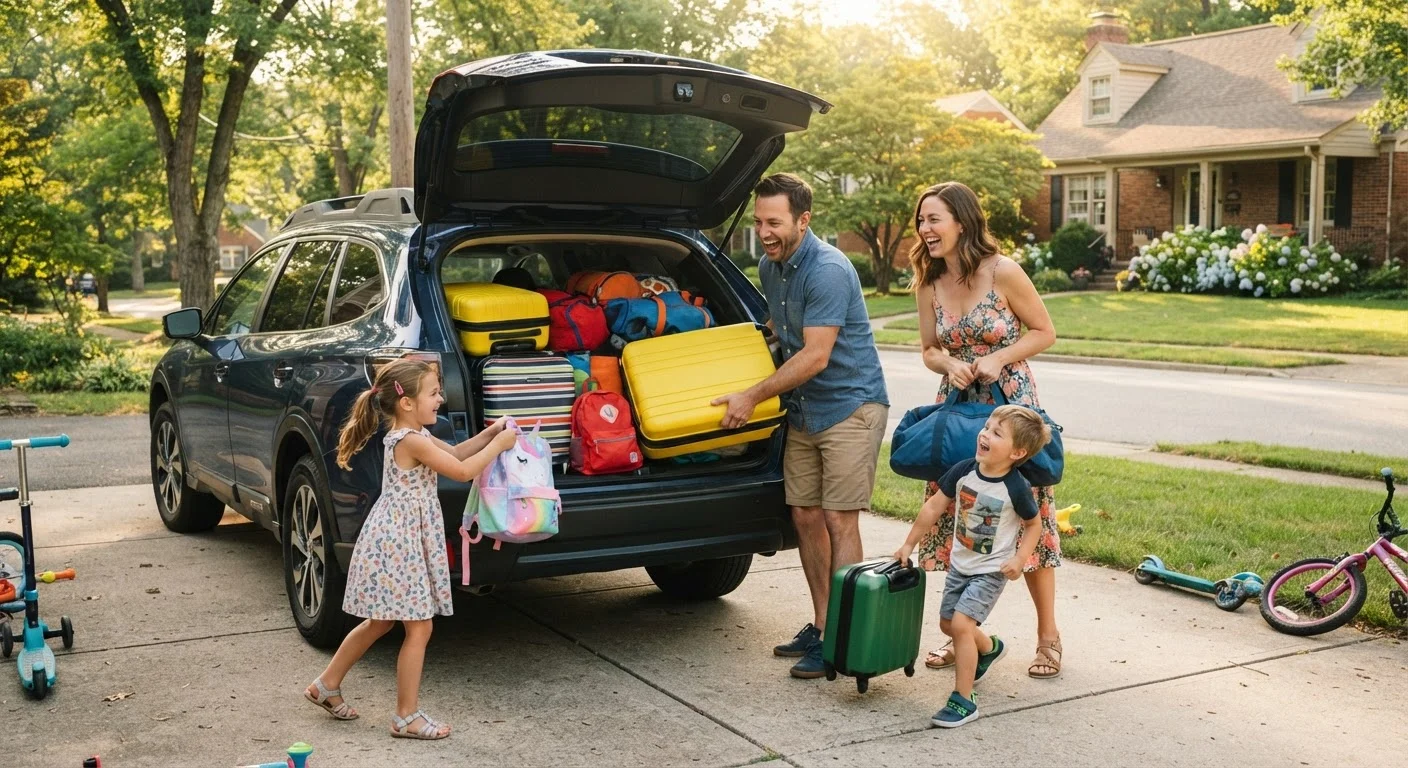
Pack a dedicated travel bag for each child with a comfort item, a change of clothes, and enough snacks for a full travel day. Having snacks on hand prevents expensive and time-consuming stops at tourist traps when someone gets hungry mid-drive or mid-walk.
Build at least one unstructured afternoon into every two to three days. Over-scheduling is one of the most common trip-planning errors families make on their first vacation. Kids, especially younger ones, need time that is not directed by anyone.
Before you finalize any plans, run through a full pre-departure checklist. The family travel prep checklist covers documents, packing, reservations, and safety steps so nothing critical falls through the cracks.
What most first-timers don't expect
The first family vacation rarely goes exactly as planned, and that is fine. What catches most families off guard is not disaster but pace: everything takes longer with kids. Getting everyone ready in the morning, loading the car, finding parking, eating out, and getting through a single attraction all take more time than the same tasks would for adults alone.
Factor this into every day's plan. If an attraction's website says two hours, assume three. If dinner looks like a one-hour sit, plan for ninety minutes. A slightly looser itinerary means fewer rushed moments and more space to follow the kids when they get genuinely excited about something unexpected.
The other surprise many families report is that their kids enjoyed the simplest parts most: the hotel pool, a local playground, room service one evening, or collecting rocks on a trail. A first vacation does not need an ambitious agenda to be memorable.