

Key Takeaways
Why popular destinations still have room for budget families
America's most visited family travel spots carry a reputation for high costs, and some of that reputation is earned. Theme park day passes, parking garages, and souvenir shops can drain a travel fund fast. But inside the same cities and regions, free public spaces, federally managed sites, and low-cost programs sit right alongside the expensive options. The gap between a $300 day and a $30 day often comes down to planning, not sacrifice.
Understanding which costs sneak up on families before you arrive makes it easier to build a day around free and low-cost choices rather than scrambling for them once you're already there. The list below covers specific activities at America's most visited destinations that genuinely cost little or nothing.
Free ranger programs at national park gateway areas
Many of the country's most visited regions sit next to or inside national park boundaries. The National Park Service runs free ranger-led programs at visitor centers, including guided walks, Junior Ranger activities for children, and evening talks at campground amphitheaters. These programs are included with park admission, and families holding an America the Beautiful Annual Pass (currently $80 per vehicle, valid at over 2,000 federal sites for one year) pay nothing beyond that flat fee. Children 15 and under are always admitted free at national park sites.
The Junior Ranger program works across parks nationwide. Kids complete an activity booklet, earn a badge, and leave with a structured experience that costs nothing extra. Ranger walks typically run one to two hours and cover geology, wildlife, or history depending on the location.
Children 15 and under are always admitted free at national park sites.
Smithsonian Institution museums in Washington, D.C.
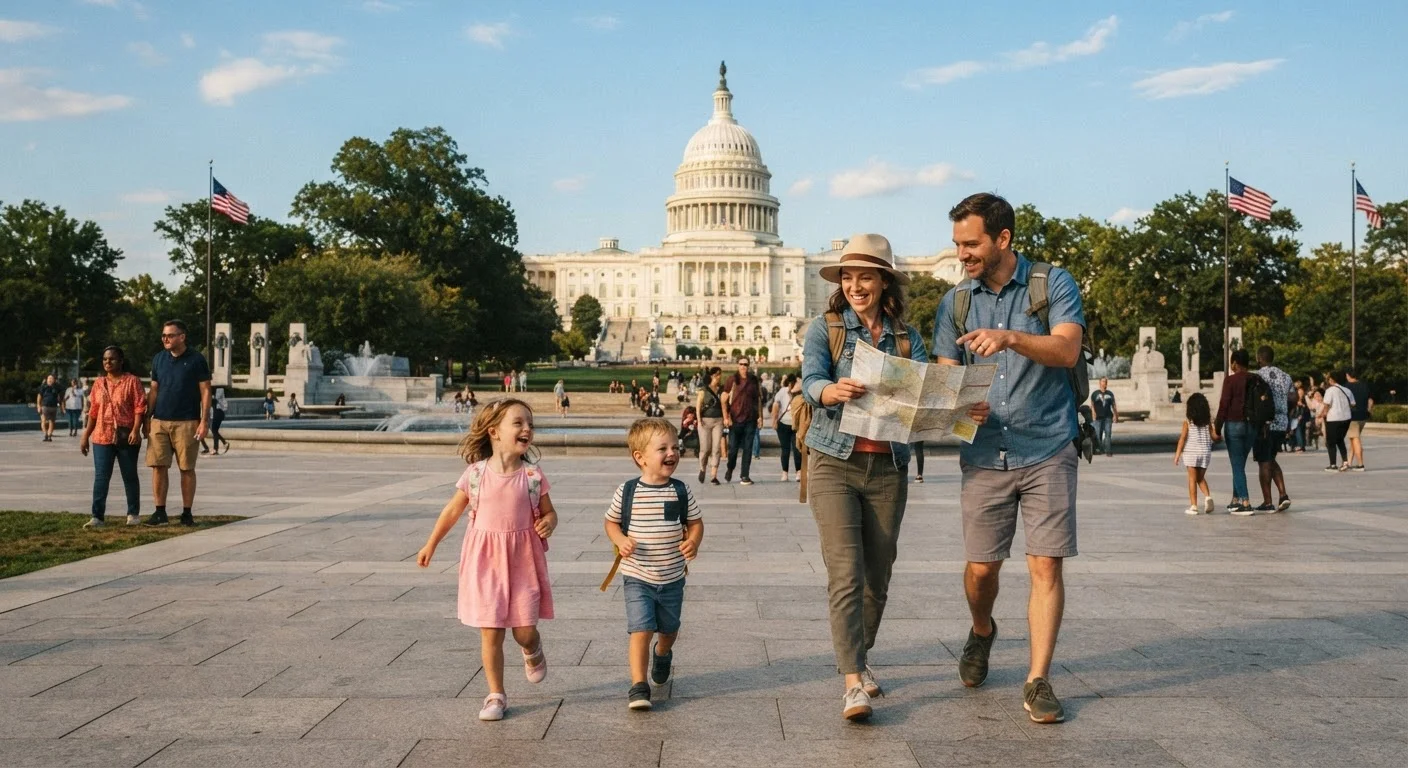
Washington, D.C. consistently ranks among America's most visited family destinations, and the Smithsonian Institution's 19 museums and galleries on or near the National Mall are all free to the public. That includes the National Air and Space Museum, the National Museum of Natural History, the National Zoo, and the National Museum of American History. No tickets, no reservations required for general admission (some special exhibitions charge separately).
A family can spend two to three full days moving between Smithsonian buildings without spending a dollar on admission. The buildings are also climate-controlled, which matters during summer visits. The National Mall itself is a free public space with room to run, picnic, and explore the Washington Monument grounds and the Lincoln Memorial Reflecting Pool.
A family can spend two to three full days at Smithsonian museums without paying a dollar in admission.
Free beach and shoreline access at popular coastal destinations
Florida, the Carolinas, and California draw millions of families to their coastlines each year. Many people assume proximity to a resort area means paying for beach access, but most public beach access points in the U.S. are free. State-managed beach parks in Florida, for example, charge a per-vehicle fee of a few dollars, far below the cost of a resort amenity fee for the same stretch of sand.
In San Diego, Coronado Beach and Mission Beach are both free public beaches with no admission charge. Along the Outer Banks in North Carolina, Cape Hatteras National Seashore beaches are free to access on foot. Parking fees at some lots apply, so walking or biking from nearby accommodation reduces that cost further.
Most public beach access points in the U.S. are free, regardless of nearby resort pricing.
Free days and pay-what-you-wish admission at city museums
Major American cities near top family destinations offer free or reduced-admission days at science centers, art museums, and children's museums. The Denver Art Museum offers free admission to children under 18 year-round. The Cleveland Museum of Art has no general admission charge. Many institutions in Chicago, including the Art Institute and the Field Museum, participate in free days for Illinois residents and reduced-cost days open to all visitors.
Checking each museum's official website before you travel takes about ten minutes and can reveal free windows that align with your itinerary. Some libraries also distribute free museum passes to cardholders, including visitors who obtain a temporary card. This approach works well in cities like Boston, Denver, and Minneapolis.
Ten minutes of research can uncover free museum days that align with your travel dates.
Historic sites and monuments with no admission charge
The National Park Service manages hundreds of historic sites where admission is free. Independence National Historical Park in Philadelphia, including Independence Hall (timed entry passes are required but free), the Liberty Bell Center, and the surrounding historic district, costs nothing to visit. Similarly, the Freedom Trail in Boston is a self-guided walking route through 16 historic sites, most of which are free or request a small voluntary donation.
San Antonio's River Walk is a free public space, and the Alamo charges no admission for the main church building (though some surrounding exhibits charge a fee). Families who treat these sites as the centerpiece of a day rather than a filler activity get a genuinely educational and engaging experience at no cost.
Independence National Historical Park in Philadelphia costs nothing to visit, including Independence Hall entry.
Free outdoor concerts, festivals, and public events
Practically every major American city hosts free outdoor programming during summer months. Chicago's Millennium Park runs free concerts at the Jay Pritzker Pavilion throughout the summer. New York City's SummerStage program presents free performances in Central Park and in parks across all five boroughs. Nashville's Bicentennial Capitol Mall State Park holds free events, and the honky-tonk district on Lower Broadway has live music at no cover charge most nights.
City parks departments and convention and visitors bureaus publish event calendars online. Searching the destination's parks department website a week or two before arrival usually turns up free programming that isn't widely advertised. These events work especially well for families with younger children who benefit from open outdoor spaces.
City parks departments publish free event calendars that most visitors never bother to check.
Making the most of your itinerary
Pairing these free and low-cost activities with smart planning around timing and transportation stretches a travel budget further. Visiting in shoulder season often means shorter lines at free sites, which makes the free option more enjoyable on top of being cheaper. If you're driving to any of these destinations, a well-mapped road trip plan can fold in free stops along the way and reduce the pressure to fill every paid hour at the destination itself.
Check library passes before you leave home
Many public library systems across the U.S. loan free museum passes to cardholders. Some libraries extend temporary cards to residents of other cities. Calling your local library branch before your trip to ask about museum partnerships takes five minutes and can save a family of four $50 or more in admission costs at popular science centers and art museums.
For families who want extended outdoor time at lower cost, comparing national and state park options near each destination can surface alternatives that offer more space and fewer crowds for the same price or less.