

| Red light urgency | Stop driving as soon as it is safe to do so |
| Amber light urgency | Schedule service within a few days |
| Flashing check engine vs. steady | Flashing requires immediate action; steady allows short-trip driving to a shop |
| TPMS activation threshold | Approximately 25% below recommended tire pressure (U.S. National Highway Traffic Safety Administration (NHTSA)) |
| OBD-II standard applies to | All passenger vehicles sold in the U.S. since 1996 (U.S. Environmental Protection Agency (EPA)) |
How the warning light system works
Modern vehicles use an onboard diagnostics system (OBD-II, standard on all cars sold in the U.S. since 1996) that continuously monitors dozens of sensors. When a sensor reading falls outside acceptable range, the system stores a diagnostic trouble code and triggers the corresponding warning light. Some lights reflect direct sensor failures; others indicate that the engine control module has detected a pattern suggesting a problem.
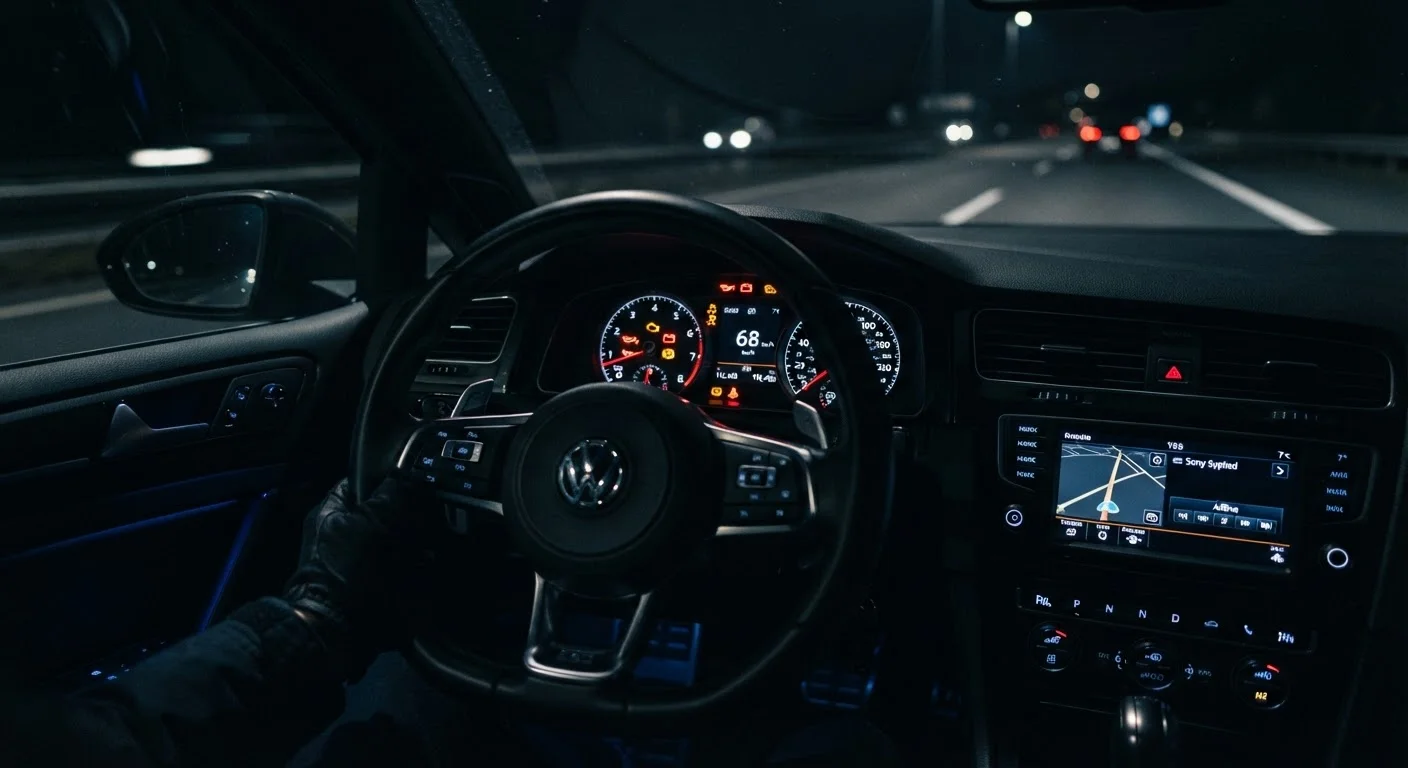
Warning lights follow a general color convention. Red lights signal conditions requiring immediate attention, because continuing to drive risks serious damage or a safety hazard. Amber or yellow lights indicate a fault that needs attention soon but usually allows you to complete a short trip. Blue and green lights are informational, confirming that a feature is active rather than warning of a problem.
OBD-II
On-Board Diagnostics II, a standardized system required on all U.S. passenger vehicles since 1996. It monitors emissions, engine, and drivetrain sensors and stores diagnostic trouble codes that a scan tool can read.
Diagnostic trouble code (DTC)
A standardized alphanumeric code stored by the OBD-II system when a sensor reading falls outside normal parameters. Mechanics use a scan tool to retrieve these codes and identify the source of a warning light.
TPMS
Tire Pressure Monitoring System. A federally required system on all U.S. vehicles produced after 2007 that alerts the driver when a tire drops roughly 25 percent below the recommended pressure.
Catalytic converter
An emissions control device in the exhaust system that converts harmful combustion byproducts into less harmful gases. Engine misfires can overheat and permanently damage it, making replacement expensive.
Alternator
A generator driven by the engine that produces electricity to power vehicle systems and recharge the battery while the engine runs. A failed alternator drains the battery quickly.
Lights that require you to stop immediately
An illuminated oil pressure warning (an oil can icon) means the lubrication system has lost pressure. Driving with low oil pressure can destroy an engine within minutes. Pull over safely, shut the engine off, and check the oil level before going further.
The engine temperature warning (a thermometer in liquid) signals that the coolant temperature is critically high. Continuing to drive risks warping the cylinder head or cracking the engine block, repairs that commonly run into thousands of dollars. Stop the car, let it cool, and check the coolant reservoir only after the engine is completely cold.
A red battery warning light that stays on while the engine is running usually points to a charging system failure rather than a dead battery. The alternator may have stopped charging, and you may have only minutes of driving time before the electrical system loses enough voltage to keep the engine running.
A brake system warning light combined with a soft or sinking pedal indicates low brake fluid or a hydraulic failure. Do not continue driving. If the light comes on only when you release the parking brake, the parking brake is simply still engaged.
Lights that need attention within a few days
The check engine light (an engine outline or the words "Check Engine") is the most misunderstood light on the dashboard. It covers hundreds of possible codes, from a loose gas cap to a failing catalytic converter. If it is steady, not flashing, you can drive carefully to a shop within a day or two. A flashing check engine light means the engine is misfiring actively, which can damage the catalytic converter quickly. Treat a flashing check engine light like a red light.
The tire pressure warning (TPMS, shown as an exclamation point inside a flat tire shape) activates when one or more tires drop significantly below the recommended pressure. Underinflated tires reduce fuel economy and wear unevenly. Check pressures with a gauge and inflate to the specification on the driver's door jamb sticker, not the number printed on the tire sidewall.
A transmission temperature warning means the fluid is overheating, often during towing or extended idling in traffic. Reduce the load on the drivetrain and have the fluid and cooling system inspected.
Lights that are commonly misread
| Red light urgency | Stop driving as soon as it is safe to do so |
| Amber light urgency | Schedule service within a few days |
| Flashing check engine vs. steady | Flashing requires immediate action; steady allows short-trip driving to a shop |
| TPMS activation threshold | Approximately 25% below recommended tire pressure (U.S. National Highway Traffic Safety Administration (NHTSA)) |
| OBD-II standard applies to | All passenger vehicles sold in the U.S. since 1996 (U.S. Environmental Protection Agency (EPA)) |
The traction control light flashing briefly during acceleration on a slippery surface is normal: it means the system is working. If it stays on constantly, the system has been disabled or a sensor has failed.
The service due or wrench icon is a scheduled maintenance reminder, not an emergency. It typically trips at oil change intervals programmed into the vehicle's computer. You can drive until your next convenient service appointment.
The stability control warning (often a car with wavy lines beneath it) behaves similarly to traction control. Momentary activation during cornering is normal. A steady light indicates a fault in the system, which reduces your vehicle's ability to help recover from a skid.
If you are evaluating a used vehicle and notice any warning lights on the dashboard, that is a clear signal to dig deeper before purchase. Our used car inspection walkthrough covers how to assess those signals alongside the rest of the vehicle.
This article is for general informational purposes only. For diagnosis and repair decisions specific to your vehicle, consult a qualified, licensed mechanic.