

Key Takeaways
Why grocery budgets slip even when families try
Food spending is one of the most variable line items in a household budget, which makes it a real opportunity for savings. The U.S. Bureau of Labor Statistics consistently shows food at home as one of the top expenditure categories for American families. Yet many households buy more than they use, pay more per ounce than they realize, and make shopping decisions without a clear plan.
The result is a grocery bill that feels unavoidable, even when it isn't. The steps below address the most common leaks: poor planning, ignoring unit prices, and navigating stores without a strategy. None of them require couponing expertise or extreme discipline. See how food costs fit into the wider picture in our guide to building a monthly household budget.
Build a weekly meal plan before writing a shopping list
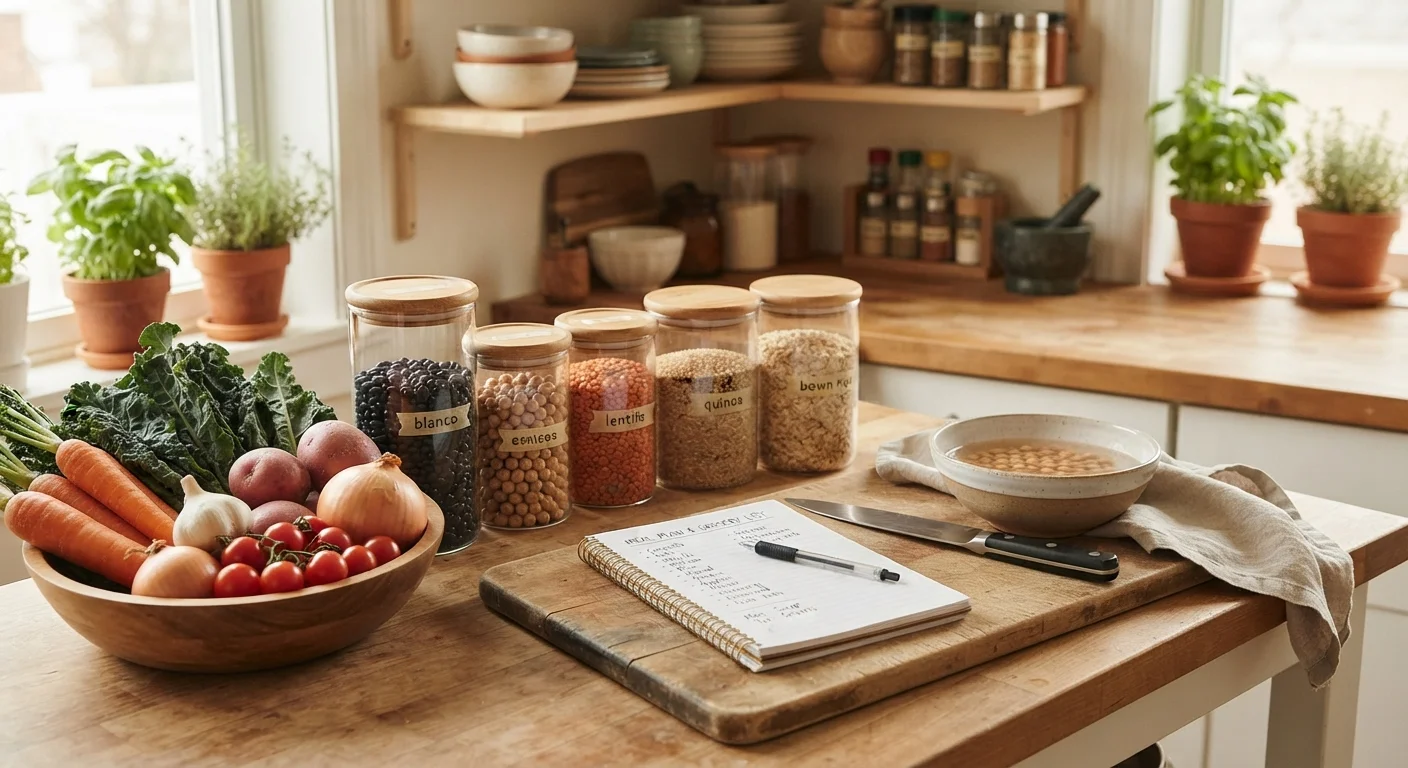
Write out every meal for the week, including lunches and at least a few planned snacks. Use what is already in your pantry and refrigerator as a starting point. Then build the shopping list only from what the plan requires. This single habit eliminates most impulse purchases and prevents buying items you already have.
Plan for at least one or two meals that use the same base ingredient in different ways. A batch of cooked rice, for example, can anchor a stir-fry on Tuesday and a grain bowl on Thursday. This reduces preparation time and stretches ingredients further.
Compare unit prices, not package prices
Most grocery store shelf labels display a unit price, typically cost per ounce, per count, or per pound, in small print near the item price. This number is the only figure that allows a fair comparison between different package sizes and brands. A larger package is not always cheaper per unit, and a store brand is not always the lower unit price.
Get into the habit of checking this figure before placing an item in the cart. Over a full shopping trip, unit-price comparisons can reduce the total by a meaningful amount without changing what you eat.
Shift protein sources toward lower-cost options
Meat is often the single most expensive category in a grocery cart. Reducing its proportion, rather than eliminating it entirely, lowers costs while keeping meals satisfying. Dried beans, lentils, canned chickpeas, eggs, canned tuna, and plain Greek yogurt all provide substantial protein at a fraction of the cost of beef or chicken breast.
A straightforward approach is to designate two or three dinners per week as plant-protein nights. Most families adjust within a few weeks, particularly when the dishes are well-seasoned and filling.
Batch cook and freeze for future meals
Cooking large quantities of soups, stews, chili, or grain dishes and freezing portions in labeled containers reduces the temptation to order takeout on busy nights. It also makes use of ingredients bought in bulk before they spoil. Most cooked legume dishes and grain-based meals freeze well for up to three months.
Set aside one cooking session per week, even two hours on a Sunday afternoon, to prepare several meals at once. The time investment is lower per meal than cooking from scratch every night.
Use store loyalty programs selectively
Most major grocery chains offer free loyalty programs that provide digital coupons and sale prices. These programs are worth using for items already on your list. The risk is treating a discounted item as a reason to buy something you would not otherwise purchase. Savings only occur when the item was already part of the plan.
Check the store app or website before shopping to activate relevant offers. Focus on staples rather than prepared foods, which are often discounted precisely because they carry higher margins to begin with.
Shopping smarter at the store
Once your plan is set, the store itself is the next challenge. Retail grocery layouts place high-margin, processed items at eye level and near entrances. Staples like flour, rice, and canned goods tend to sit on lower shelves or at the back of the aisle. Produce and dairy are typically positioned to require walking past prepared foods.
Buying store-brand versions of pantry staples is one of the most straightforward ways to reduce spending. The USDA Economic Research Service has documented that private-label foods often carry nutritional profiles similar to their name-brand counterparts at lower prices. Checking the unit price label on the shelf, rather than the package price, tells you which size or brand actually costs less per ounce or per serving.
Perimeter-first shopping saves time and money
Most grocery stores place fresh produce, dairy, and proteins along the outer walls. Starting your trip on the perimeter and moving to specific interior aisles only for planned pantry items helps you avoid entire sections stocked with high-cost processed foods. It also tends to shorten shopping time, which reduces exposure to in-store promotions.
If your household has the storage space, buying dry goods such as oats, rice, lentils, and pasta in larger quantities typically lowers the cost per serving. Perishables require more caution: bulk only makes sense if you will use the item before it spoils.
Reducing food waste is itself a form of savings. The Natural Resources Defense Council has estimated that the average American family discards a significant portion of food purchased. Storing produce correctly, rotating pantry items so older stock is used first, and turning leftovers into planned meals all reduce what gets thrown away.
Grocery spending connects to broader household finances. Families who track recurring costs often find food is where overruns hide. Our article on recurring expenses that quietly drain family finances covers other overlooked budget lines worth reviewing.
Nutritional value on a tight food budget
Eating well on less money is achievable when you focus on nutrient density rather than convenience. The foods with the highest protein, fiber, and micronutrient content per dollar tend to be dried legumes, whole grains, eggs, canned fish, and seasonal vegetables. These are not fringe foods; they form the foundation of many diets that research associates with long-term health.
Families concerned about reducing meat spending can replace a portion of meat in dishes with lentils or black beans without a significant nutritional trade-off. A pound of dried lentils, which costs roughly a dollar or two at most grocery stores, yields multiple servings of protein and fiber. Eggs remain one of the least expensive complete protein sources available.
Frozen vegetables are nutritionally comparable to fresh in most cases, according to published food science research, because they are frozen shortly after harvest. They also reduce spoilage risk, which is a practical advantage for families who cannot shop frequently.
If your household grows some of its own food, even a small container garden can offset costs on herbs and some vegetables. Our guide to container gardening on a tight budget covers what works in limited outdoor space.
This article provides general financial and nutritional information for educational purposes. It is not a substitute for advice from a registered dietitian, financial adviser, or other qualified professional regarding your specific circumstances.