

Key Takeaways
Why containers make sense for budget gardeners
Container gardening removes two of the biggest barriers to growing your own food or flowers: a large yard and high startup costs. A patio, balcony, stoop, or sunny windowsill is enough to get started. You control the soil quality from day one, which means fewer weed problems and less wasted effort on ground that may be compacted or contaminated.
The upfront cost is also flexible. A five-gallon bucket costs very little, and many families already have buckets, old pots, or wooden crates sitting unused. If you are weighing whether to build raised beds instead, the raised garden bed guide walks through when that investment pays off. For renters or anyone short on horizontal space, containers are often the more practical path.
Choosing and sourcing containers without spending much
The container itself matters less than what is inside it and whether it drains properly. Drainage holes are non-negotiable. Standing water suffocates roots within days. If a container lacks holes, drill or punch them before planting.
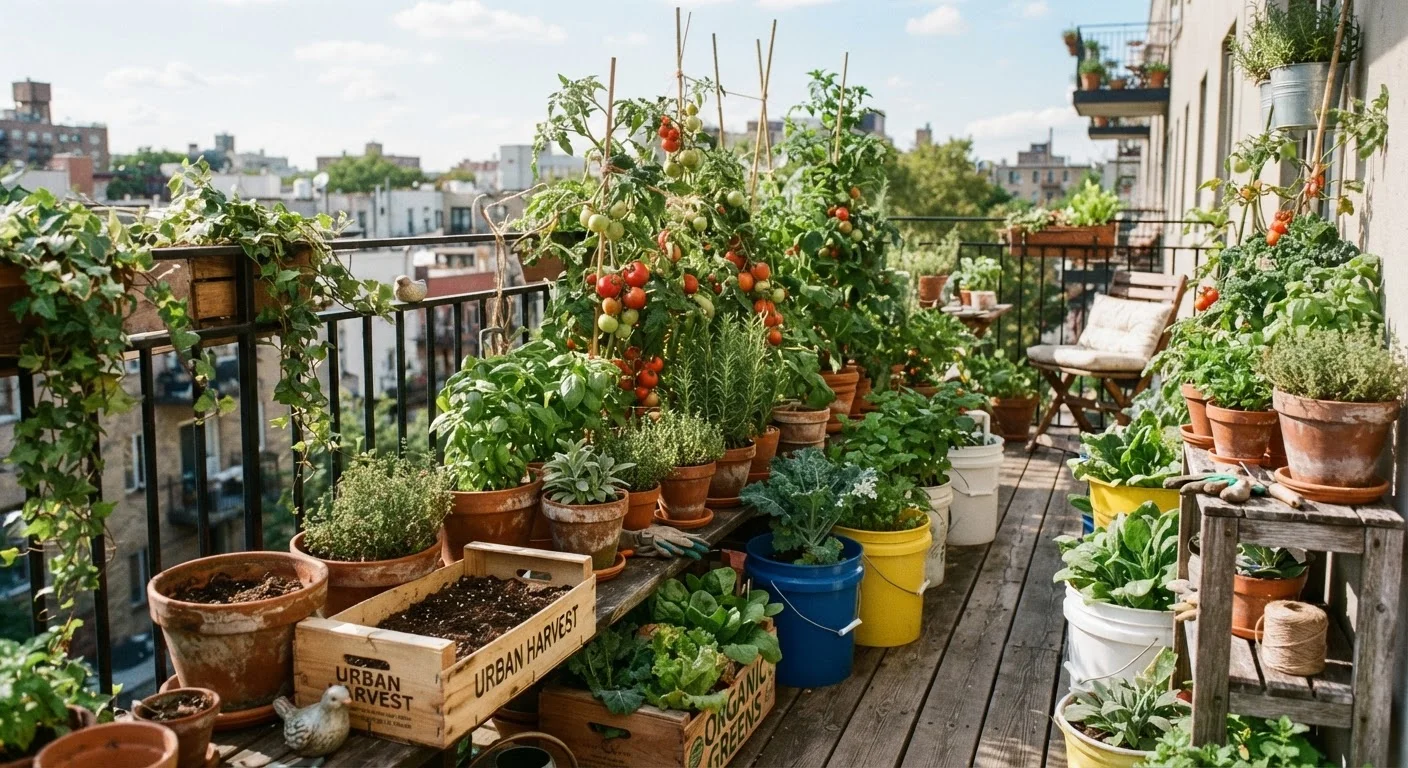
Good free or low-cost options include five-gallon buckets from bakeries or delis (many give them away), wooden pallets broken down into planter boxes, nursery pots saved from previous purchases, and large tin cans. Dark-colored containers absorb more heat, which can stress roots in hot climates. A coat of light-colored exterior paint on the outside of a dark bucket reduces heat absorption without harming plants.
Size matters by plant type. Lettuce, radishes, and herbs do fine in containers six to eight inches deep. Tomatoes, peppers, and squash need at least twelve to fifteen gallons of volume to produce well. Underpotting is one of the most common reasons container vegetables disappoint.
Making potting mix go further
Bagged potting mix is one of the bigger ongoing costs in container gardening. Garden soil from the ground is not a substitute: it compacts in pots and blocks the drainage roots need. However, you can stretch purchased mix without compromising plant health.
Mixing finished compost into potting mix at roughly a one-to-four ratio adds nutrients and improves moisture retention. If you make your own compost, the cost is essentially zero. The home composting guide covers what actually belongs in a compost pile and how quickly it breaks down.
Adding perlite (the small white particles sold in garden centers) at about ten to fifteen percent of the mix by volume improves drainage and prevents compaction over time, which means the mix stays usable longer. At the end of the season, refresh used potting mix by removing dead roots, topping it off with compost, and storing it in a sealed bag or bin over winter.
Plants that perform well in containers on a budget
Some plants are simply better suited to container life than others. The most cost-effective choices produce heavily relative to the space and care they need.
For food, cherry tomatoes outperform large slicing varieties in pots because they set fruit faster and tolerate drier conditions better. Bush-type beans, compact pepper varieties, kale, Swiss chard, and most herbs (basil, parsley, chives, mint) all do well. Mint spreads aggressively, so keep it in its own container. Lettuce and salad greens are among the fastest returns: some varieties are ready to cut in three to four weeks from transplant.
For flowers, marigolds and nasturtiums both cost very little from seed, grow readily in containers, and attract pollinators that benefit any nearby vegetable pots. Nasturtium flowers and leaves are also edible, which adds a small bonus harvest.
Starting from seed rather than buying transplants saves money across the season. A single seed packet typically costs less than one transplant and contains enough seed for multiple containers. Growing a healthy vegetable garden can reduce grocery spending over time, and the grocery budget guide has additional context on making that connection work.
Watering and feeding without overcomplicating it
Containers dry out much faster than ground beds, especially in summer heat or wind. A daily check during warm months is realistic for most setups. Stick a finger an inch into the soil: if it feels dry at that depth, water thoroughly until it drains from the bottom.
Grouping containers together slows moisture loss because the pots shade each other's sides and reduce airflow between them. This also makes watering faster. Placing saucers under pots lets plants absorb runoff, though emptying saucers after heavy rain prevents root rot.
Container plants exhaust the nutrients in potting mix faster than ground-grown plants. A basic liquid fertilizer diluted to half strength every two weeks during the growing season is usually enough for most vegetables. Compost tea, made by steeping finished compost in water overnight and straining it, is a free alternative that adds moderate fertility. Avoid over-fertilizing with nitrogen-heavy products: it produces abundant leaves on plants like tomatoes at the expense of fruit. Low-cost yard updates can complement a container setup if you want to extend your outdoor space further.