

Key Takeaways
Why small yard changes add up fast
Most homeowners assume improving curb appeal means hiring a landscaper or spending a weekend at the hardware store with a cart full of lumber. That is rarely true. The updates that neighbors and potential buyers actually notice tend to be the ones that fix neglect rather than add complexity: a clean edge where grass meets pavement, a front door that looks intentional, a driveway free of years of embedded grime.
These projects share two qualities. They are affordable, usually under $100 and often under $30. And they take a few hours, not a full weekend crew. The list below focuses on changes with a visible payoff that you can realistically finish before Sunday dinner.
If you enjoy working with plants and have a small yard or patio, our guide to container gardening on a tight budget pairs well with several of the ideas here.
Edge and define your lawn borders
Grass that bleeds into sidewalks and flower beds makes even a well-maintained yard look unkempt. A manual half-moon edger or a basic rotary edger handles most jobs without electricity. One pass along the driveway, walkway, and bed edges creates a clean line that reads as intentional care from the street.
Plan to re-edge every two to three weeks during the growing season. The first pass takes the longest; after that, you are simply maintaining a line that already exists.
A clean edge costs almost nothing but signals that someone pays attention to this property.
Refresh mulch in visible beds
Faded, thin mulch makes planting beds look abandoned. A two-to-three-inch layer of fresh wood chip or shredded bark mulch covers bare soil, suppresses weeds, and gives beds a finished look that holds through the season. Focus on the beds closest to the front door and driveway, where eyes naturally land first.
Bulk mulch from a garden center or municipality is almost always less expensive per cubic foot than bagged versions. Many towns offer free wood chip mulch from tree-trimming operations; check your local public works site before buying.
Fresh mulch in front-facing beds is one of the most visible improvements per dollar spent.
Paint or clean the front door
The front door draws more visual attention than any other single element on a house facade. If the current color is chipped, faded, or simply dated, a quart of exterior paint is enough to cover most standard doors. You do not need to change colors dramatically; even refreshing the existing shade eliminates the worn appearance that reads as neglect.
If the door is in good shape, a thorough cleaning with a mild soap solution can remove road grime and cobwebs that accumulate in recessed panels. Clean hardware while you are at it. The whole process can take under two hours.
A freshly painted front door changes how the whole facade reads, for the cost of one quart of paint.
Pressure wash hard surfaces
Concrete driveways, brick walkways, and painted siding collect algae, dirt, and oxidation that make a home look older than it is. A pressure washer clears that buildup in a fraction of the time hand scrubbing would take. Many home improvement stores rent machines by the hour or day if you do not own one.
Work systematically: start at the top of any vertical surface and move downward, and work away from the house on flat surfaces. Avoid directing high-pressure water at windows, wood trim, or gaps around doors and vents, where moisture intrusion can cause damage.
Pressure washing reveals the original color of surfaces that have been slowly graying for years.
Replace house numbers and the mailbox
Plastic house numbers that have yellowed, or a mailbox dented and rusting at the post, are details people notice even without consciously cataloguing them. Replacing both typically costs less than $50 total and takes an afternoon. Match the finish of the new numbers to existing exterior hardware like porch light fixtures for a coordinated look.
Choose a number size and style that is readable from the street, particularly at night. Visibility matters practically, not just aesthetically, for emergency services and delivery drivers.
Legible, matching house numbers and a clean mailbox signal upkeep without requiring a large investment.
Add potted plants near the entrance
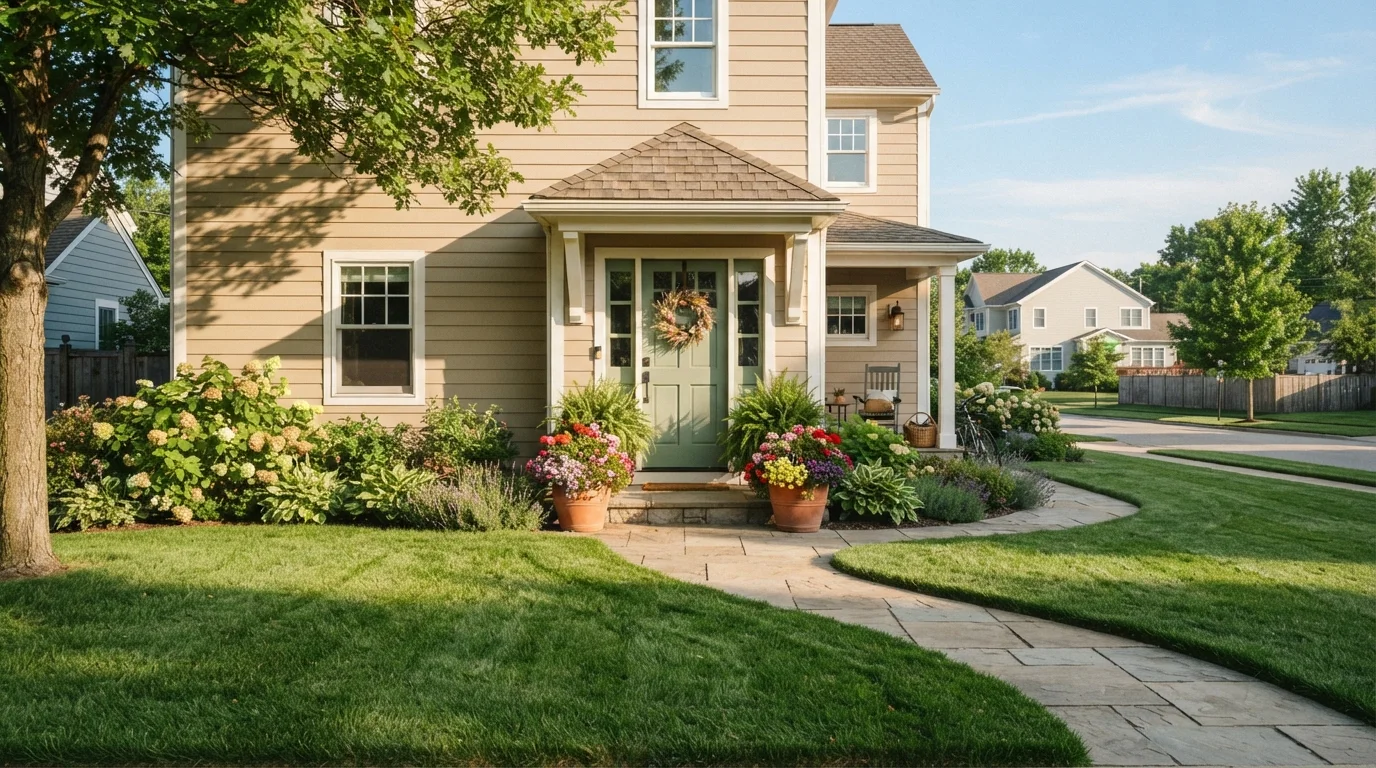
A pair of containers flanking the front door adds color and scale without permanent landscaping work. Choose plants suited to your sun and water conditions. In full sun, many herbs and ornamental grasses hold up through summer heat. In shade, impatiens and ferns stay full through the season.
Reusing containers you already own keeps costs down. Our article on container gardening on a budget covers which materials work, how to extend potting soil, and what plants give you the most return for the least maintenance.
Two well-placed containers near the door add presence to an entrance that landscaping alone cannot.
Clear out overgrown foundation shrubs
Shrubs that have grown past window sills or spread across walkways block light, look untidy, and can trap moisture against siding. Hard pruning most common foundation shrubs, including arborvitae, boxwood, and holly, is straightforward with loppers and a hand saw. Remove dead interior branches first, then shape from the outside.
Be cautious with any pruning near the house foundation, utility boxes, or overhead lines. If a shrub is large enough that removing it requires cutting near the ground line, check whether roots could affect nearby plumbing before you start. For significant removal work, a licensed arborist or landscaper is worth consulting.
Cutting back overgrown shrubs opens up the facade and makes the rest of your yard work show.
Making it stick beyond the weekend
A single Saturday of work looks great on Monday. Keeping it that way costs almost nothing if you build a few habits. Spend ten minutes edging or deadheading once a week. Sweep the walkway when you collect the mail. Touch up paint nicks before they become peeling patches.
The families who get the most from these projects are the ones who treat the yard as ongoing maintenance rather than a once-a-year overhaul. That mindset also makes each individual task faster, because nothing gets out of hand.
Build a simple monthly yard checklist
Write down the five tasks that keep your yard looking its best: edging, mulch top-up, door touch-up, sweeping the walkway, and deadheading containers. Assign each a frequency. A short written list makes it easier to delegate tasks to other household members and prevents any single chore from becoming a half-day project because it was skipped too long.
For households watching every dollar, curb appeal work fits naturally alongside other cost-conscious home habits. Our grocery budget guide covers a similar philosophy: small, consistent decisions compound over time into real savings.