

Key Takeaways
Start here
Why raised beds work well for beginners
Next
Choosing your materials
Then
Sizing, placement, and layout
Build on it
Filling your bed with the right soil mix
Put it together
Getting started without overspending
Why raised beds work well for beginners
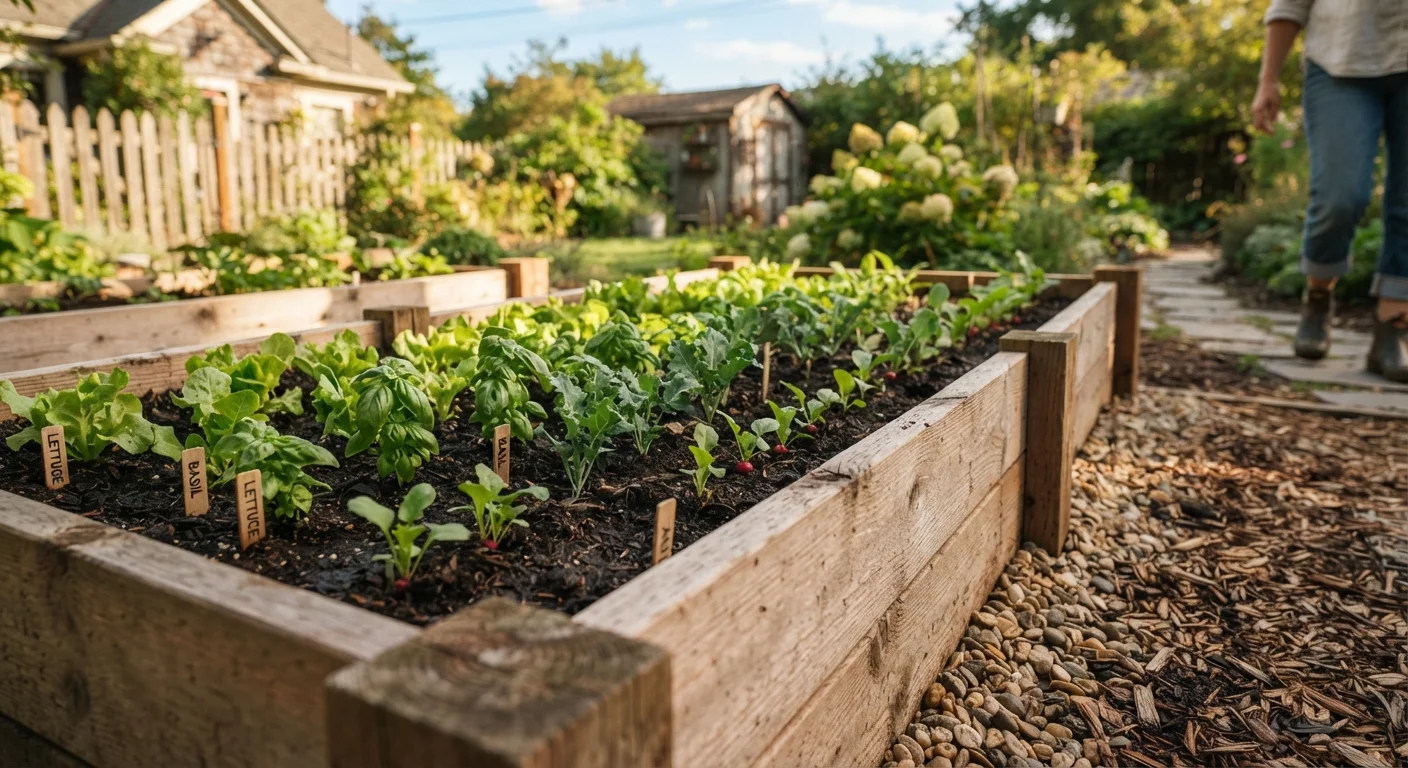
In-ground gardening puts you at the mercy of whatever soil your yard happens to have. Raised beds let you start with a known, good mix, which removes one of the most common reasons first-time gardens fail. You are not trying to fix compacted clay or sandy ground before a single seed goes in.
Raised beds also drain better than flat ground, warm up faster in spring, and keep weeds from neighboring lawn areas from creeping straight into your planting zone. Because the soil is never walked on, it stays loose, so roots spread without fighting hard, compacted ground.
For families with kids, raised beds are easier to manage together. The clear boundary makes it obvious where the garden is, and watering and weeding feel less overwhelming when the space is defined and contained.
Choosing your materials
Wood is the most common frame material because it is easy to cut, widely available, and inexpensive. Untreated pine works for a few seasons before it begins to break down. Cedar and redwood last longer naturally without any chemical treatment, though they cost more upfront. Lumber treated with alkaline copper quaternary (ACQ) is another option; it resists rot well and is considered safe for food gardens, though lining the inside walls with heavy plastic is a reasonable extra step if you prefer to keep wood preservatives away from soil.
Cinder blocks and concrete blocks are a genuinely durable alternative. They hold heat well, which can extend your growing season slightly in cooler climates, and a block bed requires no fasteners or woodworking. The cells in the blocks can even be filled with soil to grow herbs.
Galvanized metal stock tanks have become popular for raised beds. They last for decades, but check that any metal bed you use is intended for food or water contact, since some coatings on decorative metal planters are not food-safe.
ACQ lumber
Alkaline copper quaternary is a wood preservative used in pressure-treated lumber. It resists rot and insects and is widely considered safe for use in vegetable garden beds.
Perlite
A lightweight volcanic mineral added to soil mixes to improve drainage and prevent compaction. It looks like small white pellets and does not break down over time.
Compost
Decomposed organic matter, such as food scraps and yard waste, that is added to soil to improve its fertility and moisture retention.
Vermiculite
A mineral material that holds moisture and air in soil. It is often used in seed-starting mixes and raised-bed blends alongside compost and topsoil.
Direct sow
Planting seeds directly into the garden bed rather than starting them indoors first. Some crops, like beans and carrots, prefer this method because they do not transplant well.
Sizing, placement, and layout
Width matters more than most beginners expect. A 4-foot-wide bed lets you reach the center from either long side without stepping inside, which protects the soil structure. Going wider than 4 feet makes the middle hard to reach without compacting the soil you worked to build up.
Length is flexible. A common starting size is 4 feet by 8 feet, which fits neatly in many yards and gives you enough room to grow a useful variety of plants without overwhelming a first-time gardener.
Place your bed where it gets at least 6 hours of direct sun daily. Most vegetables need full sun to produce well. If your yard is partly shaded, pick the sunniest spot available and focus on crops that tolerate some shade, like lettuce and spinach.
Leave enough space between beds for a wheelbarrow or garden cart to pass through. About 2 to 3 feet between beds is a practical minimum. If your yard has other projects in the works, low-cost yard updates can help you think about how a garden fits into the broader layout.
Filling your bed with the right soil mix
The soil in a raised bed is the whole point of building one, so it deserves real attention. A standard starting mix is roughly one-third topsoil, one-third compost, and one-third coarse material like perlite, vermiculite, or aged wood chips. This blend drains well, holds moisture without waterlogging, and gives roots the loose, airy structure they need.
Buying bags of premixed raised-bed soil is convenient but adds up fast for larger beds. Buying topsoil and compost in bulk by the cubic yard from a local landscape supply yard is almost always cheaper once you are filling more than one or two bags' worth of space. Many municipalities also offer free or low-cost compost, which cuts costs further.
Avoid filling a bed with straight topsoil or straight compost. Topsoil alone often compacts. Straight compost dries out quickly and can be too rich for some plants. The blend matters.
Getting started without overspending
One or two beds is the right scale for a first season. Building more than you can maintain in year one means more watering, weeding, and cost before you have learned what grows well in your specific conditions.
Sourcing lumber from a local home improvement store and cutting it yourself is the most cost-effective path for wooden beds. Basic construction does not require advanced tools. Four boards, four corner posts, and wood screws are enough for a standard rectangular bed.
Seeds cost a fraction of transplants and give you far more plants per dollar. Starting from seed indoors a few weeks before your last frost date works well for tomatoes, peppers, and herbs. Beans, peas, and root vegetables do better direct-sown into the bed.
If you are weighing whether a raised bed is right for your space or whether containers make more sense, our container gardening on a budget guide covers the tradeoffs in detail. Both approaches are worth understanding before committing materials and money.